
Gardens and Grounds to Explore

The Cheyenne Botanic Gardens boast nine acres of award-winning perennial and annual landscapes, as well as a diverse collection of specialty exhibits, a year-round vegetable garden, and the shining Grand Conservatory.

Walk through the xeriscape, rose, herb, cacti, wetland, cottage, and woodland gardens; spend quiet moments by Discovery Pond; travel the Garden Labyrinth; or linger in any of the historic Rotary Century Plazas to experience the life of early Wyoming settlers. There’s always something new to see!
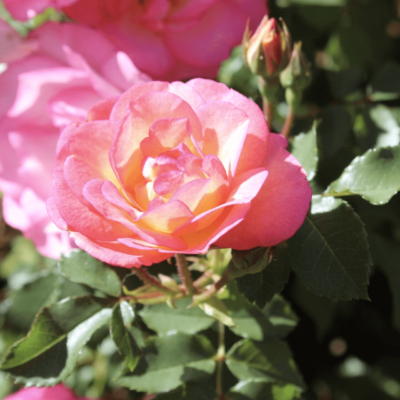
A close-up of a pink rows, its petals unfolding.

BEDONT ROSE GARDEN

The Bedont Rose Garden was added to the Cheyenne Botanic Gardens in 2003, thanks to the support of the late Hedy and Attilio Bedont—two beloved Cheyenne residents. All roses in this garden are non-grafted, hardy varieties designed to survive the harsh climate of the Wyoming plains. The best season to visit is late June through mid-July. Take a walk to the water fountain in the center, and don’t forget to test out the teakwood bench swing as well.

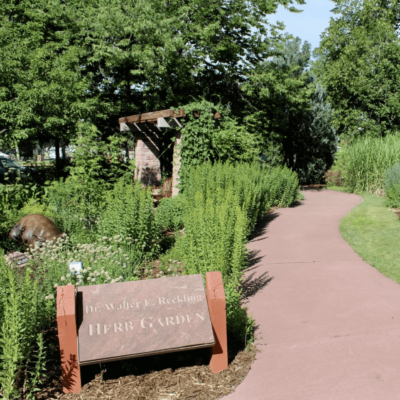
The entrance to the herb garden at Cheyenne Botanic Gardens, marked by a sign labeled "Herb Garden."

RECKLING HERB GARDEN

Grown in memory of avid gardener Dr. Walter E. Reckling, this herb garden features a delightful mixture of both culinary and medicinal herbs. We invite you to touch the leaves to experience the unique aromas of each plant.

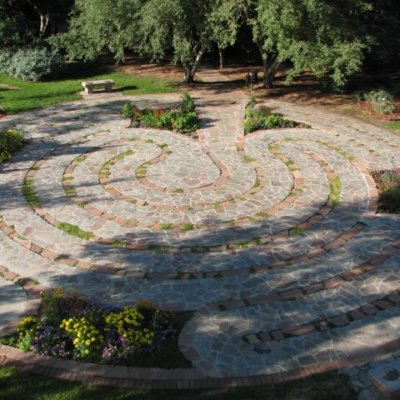
Grey pavers are arranged in a circular labyrinth path.

Labyrinth

A labyrinth is a winding path with no walls, no dead ends, and no points that require a decision. Walking the path is often used as a means of quiet contemplation—a meditative experience. As such, we ask that you do not speak to others walking the labyrinth and let others pass or step around you should your paths cross.

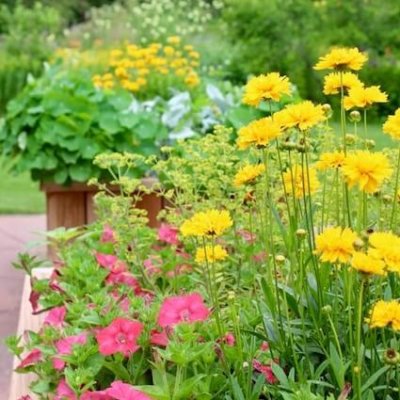
Yellow and pink flowers burst into bloom.

Sensory Garden and Gazebo

Built by local Boy Scouts in 2003, this raised garden bed and gazebo is fully accessible to people with disabilities. It is adjacent to the Botanic Gardens’ perennial border and compost demonstration and was one of the first projects undertaken when the Cheyenne Botanic Gardens first moved to Lions Park.

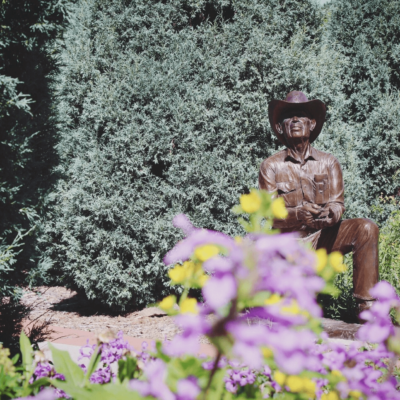
A bronze statue of a cowboy is framed by a gently blurred cluster of purple flowers.

Rotary Plazas

Each of the Rotary Century plazas teaches something unique about the relationship between people and plants in Wyoming and features native plant collections and spectacular art installations created by local artists. Visit the 1700s Plaza for a special look at the life of the Native Americans who passed through this territory. Explore the 1800s Plaza to deep dive into the experience of early settlers. Or walk through the largest of the three, the 1900s Plaza, to see how mankind went from plowing with horses to the moon.

Our steam engine, known as Ol’ Sadie, ran the Walcott-Saratoga-Encampment branch line from November 1921 until May 1954. The Union Pacific then donated the engine to the city, specifically to the Cheyenne Botanic Gardens. Surrounding the engine is a unique train folk art fence hand-constructed by Floyd Young, Sr., the last engineer driving Ol’ Sadie.

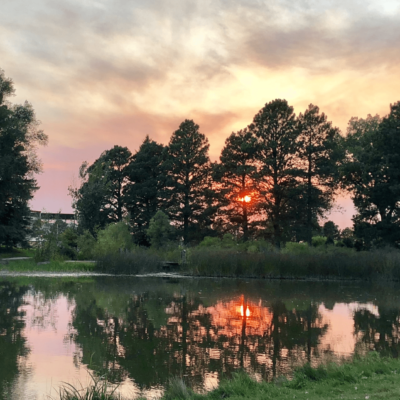
The setting sun and a grouping of trees are reflected on the surface of Peanut Pond in Lions Park.

Discovery Pond

When the Botanic Gardens moved to Lions Park in 1986, we inherited a one-foot pond that was foul smelling and didn’t support much life. Today, the site is a native wetland that supports various wildlife and a healthy fish ecosystem. When you visit, look for fish donated by the Wyoming Game and Fish Department, travel the handicapped-accessible dock, sit in our solar-powered gazebo, or read the wetlands interpretive signage created by a former group of 6th-grade students and a local Boy Scout.

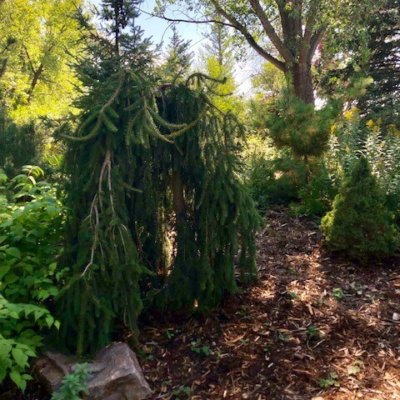
A dry river bed alongside a structure draped with shaggy greenery.

Rock and Conifer Garden

This mounded conifer garden is located near an old stream bed that used to flow through the Botanic Gardens. It is also the site of one of our most precious sculptures, “Keeper of the Garden,” artfully created by local artist Bob Fida.

A paver path divides an outdoor crevice garden with trees and colorful flowers.

Peace Garden

The Peace Garden, envisioned by Jane Sabes and funded by the Women’s Civic League, is a place of reflection, inspiration, and education. The garden itself is full of inspirational quotes on pavers. It blooms most of the summer and is a favorite site for quiet contemplation, weddings, and memorial services.

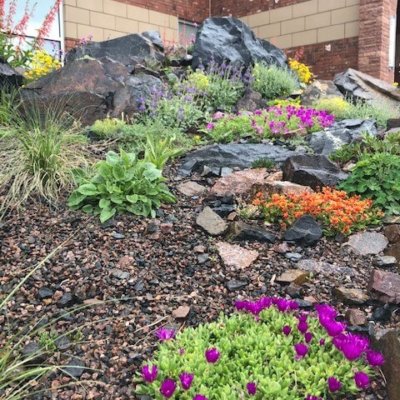
Crevice garden with colorful flowers growing between dark rocks and gravel.

Crevice Garden

Crevice Garden List

The garden contains a wide range of species that are both rare and durable in the High Plains environment, as well as an example of the Czech Crevice Gardening style.

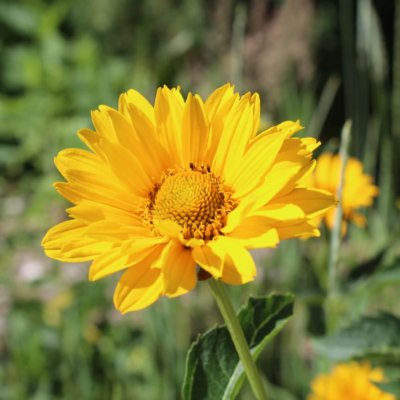
A bright yellow flower with a vivid green stem.

Habitat Hero Pollinator Garden

The garden is filled with native plant materials that create food sources and homes for pollinators that play a vital role in our ecosystem, including food production. Check out this habitat saver and grab ideas for your yard at home!

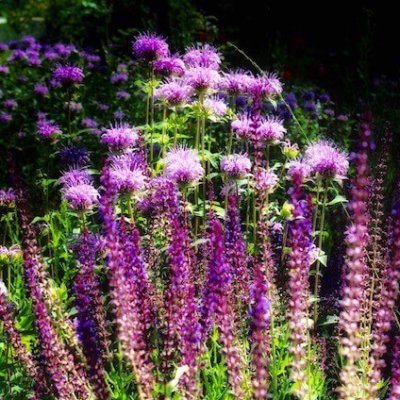
Bright purple flowers in a variety of shapes and sizes.

Cottage Garden

The Cottage Garden style roots itself in England’s cottage dwellers during the Tudor period. Cottage owners often had little money and very small spaces for their gardens. This led to garden spaces with large clumps of herbaceous plant material planted closely together based on height and color.

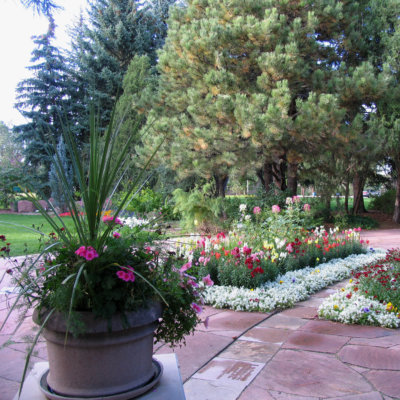
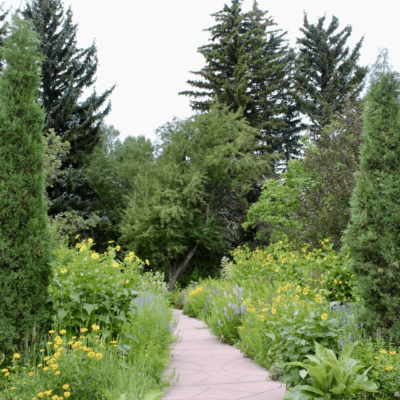
Lush green perennials line a walkway at Cheyenne Botanic Gardens.

Perennial Walk

The pathway in our main perennial border is actually an optical illusion. If you stand on the western edge of the sidewalk and look toward the east (towards the lake), the path will appear to be almost half as long as if you look from the east side of the path and look west. This is due to what is known as a “false perspective.” This false perspective was created by narrowing the width of the sidewalk as you proceed from East to West.

This garden is “Don’s Garden” in honor of our longtime and loved volunteer, Don Mason.